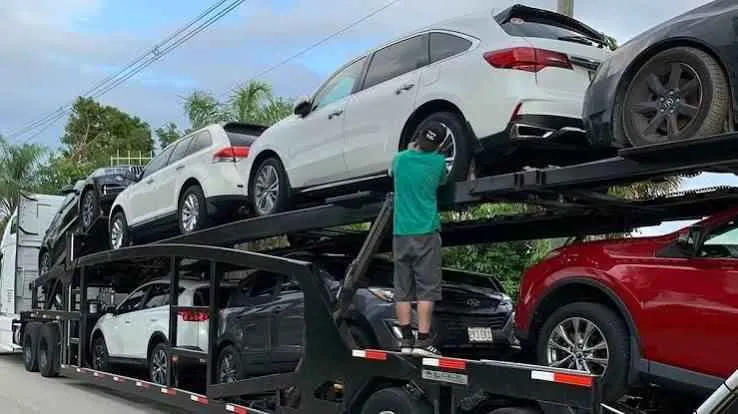
Your EV is packed with software, and it may be heavier or lower than your last car. So handing it to a transport driver raises fair questions. Will it arrive safely, and what happens to the battery on the way?
Good news: electric vehicle shipping is very manageable when you plan ahead. Below, we explain how to prepare your car, choose a trailer, question your carrier and budget for the move. It’s for owners who are relocating, out-of-state buyers, first-time shippers and EV dealers.
Can You Safely Ship an Electric Car?
Yes, you can ship an electric car on a vehicle transport trailer, much like a gas model. No shipment is risk-free, but good preparation and an informed driver help prevent avoidable problems.
What Makes EV Transport Different
- Weight: Battery packs are heavy. Trucks on Interstate highways generally face an 80,000-pound weight limit, so heavier EVs can affect load planning and price.
- Wheels: Spinning wheels can generate power. Tesla’s Cybertruck transporter instructions warn that this can cause serious damage and overheating.
- Towing: Rivian’s tow guide allows only flatbed towing. This matters if your EV ever needs a tow before or after shipping.
- Power: A drained low-voltage (12V-type) battery can stop doors, screens or the parking brake from working normally.
- Clearance: Low bumpers and large wheels may need a gentler loading angle.
Can You Ship an EV on an Open Carrier?
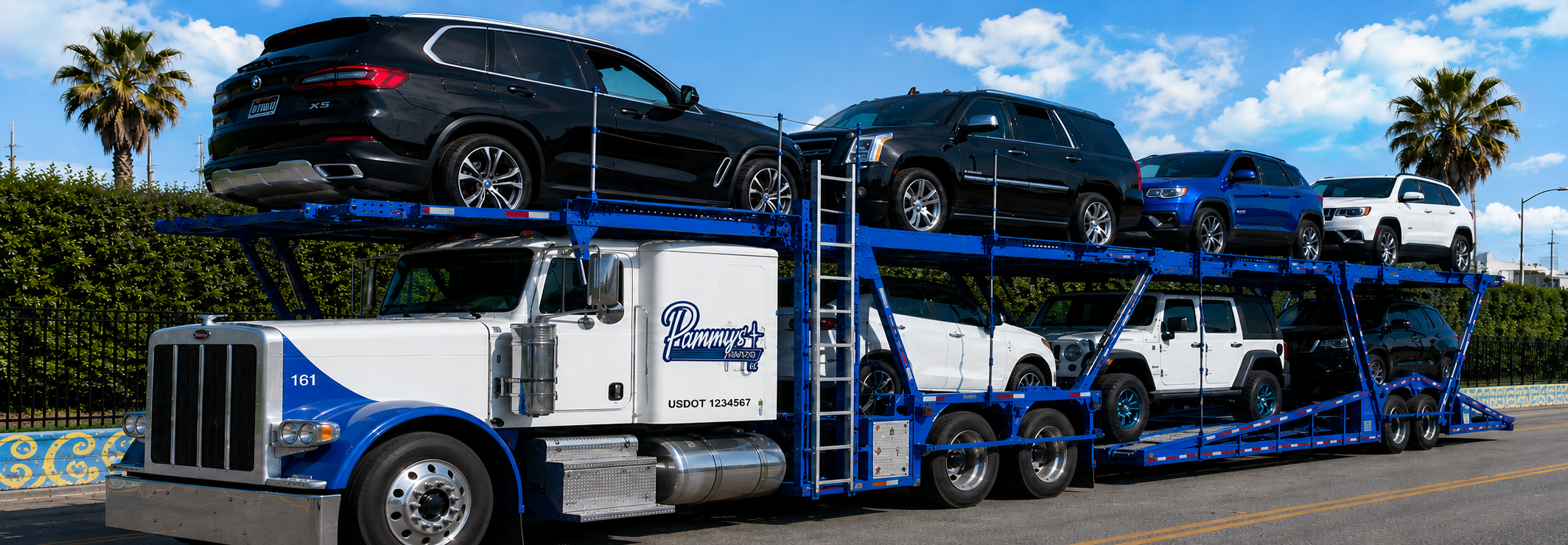
Yes. Open carrier shipping is a common, budget-friendly choice for everyday EVs. Your car is exposed to weather, dust and road debris along the way.
Enclosed car transport places your vehicle inside a covered trailer. It costs more and may take longer to schedule.
| What to compare | Open carrier | Enclosed carrier |
| Cost | Lower | Higher |
| Protection | Exposed to the elements | Covered trailer |
| Availability | More trailers | Fewer trailers |
| Often suits | Daily drivers and dealer stock | Luxury, collectible or specialty EVs |
Which Should You Choose?
Say you’re moving a daily-driver Model 3 or Ioniq 5 from San Jose to Portland. Open transport may be all you need.
Bought a high-value Lucid Air, or a Rivian with fresh paint protection? Ask for both quotes and compare. Either way, confirm that the trailer can handle your EV’s weight, width and ground clearance.
Still unsure? Read which vehicles suit enclosed transport.
What to Confirm Before Booking EV Shipping Services
A few direct questions can prevent pickup-day surprises. Get the important answers in writing.
Battery and Charging
- What charge level do you want at pickup? Requirements vary, so confirm with your carrier.
- Will the car be charged in transit? Don’t assume charging is available.
- What happens if the car loses power during loading or delivery?
Clearance and Loading
- Can your equipment safely load my car’s ground clearance, wheels and any modifications?
- Does the driver know my model’s transport settings and tie-down instructions?
- Is there room for a large truck at both addresses? If not, where can we meet?
Insurance and Credentials
- Are you a carrier or a broker? The FMCSA advises that interstate carriers and brokers must both be registered.
- What is your MC number? Check it before you pay.
- What does cargo insurance cover, including the battery and electronics? What are the limits and exclusions?
- What are the deposit, cancellation and extra-fee terms?
How to Ship an Electric Vehicle: Step by Step
- Request a quote. Share the year, make, model, ZIP codes, dates, condition and modifications.
- Read your owner’s manual. Find the transporter instructions and share them with the driver.
- Charge as instructed. Confirm the target level with your carrier, then unplug before pickup.
- Document the car. Wash it, take dated photos, and record the mileage and charge level.
- Clear it out. Remove belongings and toll tags. Secure or remove racks and loose accessories.
- Arrange access. Confirm which key card or fob the driver needs. Don’t rely on your phone key alone.
- Inspect twice. Review the bill of lading (the vehicle condition and shipping record) at pickup and delivery. Note new damage before signing.
Settings for Tesla, Rivian and Other EVs
- Tesla: Turn off Sentry Mode and scheduled preconditioning to limit battery use. Transport Mode (called Tow Mode on some vehicles) helps with loading. Models with air suspension may also need Jack Mode.
- Rivian: Vehicle Shipping Mode saves charge and turns off features such as the Gear Guard alarm. Rivian’s guide calls for it on trips over 50 miles.
- Lucid, Mustang Mach-E, Ioniq and others: Check your manual or ask your dealer for transport instructions.
Menus can change with software updates, so check the latest instructions for your exact model.
Electric Car Shipping Checklist
- Booking details and insurance confirmed in writing
- Charge level matches the carrier’s instructions
- Charging cable unplugged; confirm whether it may travel with the car
- Transport settings reviewed with the driver
- Alarms and scheduled features adjusted
- Photos taken and existing damage noted
- Personal items and toll tags removed
- Tires, leaks and low-voltage battery warnings checked
- Key card or fob ready
- Contact person available at pickup and delivery
How Much Does Electric Car Shipping Cost?
There’s no flat rate. For a general benchmark, here are 2026 estimates for standard open transport.
| Distance | Typical quote range |
| 500 miles | 650–890 |
| 1,000 miles | 800–1,350 |
| 2,500 miles | 1,050–1,800 |
The survey priced a Honda Accord shipped from Orlando, so these aren’t EV or California quotes. Kelley Blue Book notes that enclosed transport can add 50% or more.
What Affects Your Price
- Distance, route and pickup location
- Vehicle size and weight
- Open or enclosed trailer
- Season, fuel prices and date flexibility
- Whether the car runs, steers and brakes
A large electric pickup may cost more to move than a compact EV. To save, book early, stay flexible and meet near a major highway if access is tight.
Shipping within California or to Arizona, Nevada, Oregon or Washington? Our California car shipping cost guide explains local price factors. Transit often takes one to two days within the state and about seven to ten days cross-country. These are estimates after pickup, not guarantees.
Electric Vehicle Shipping With Pammy’s Transport
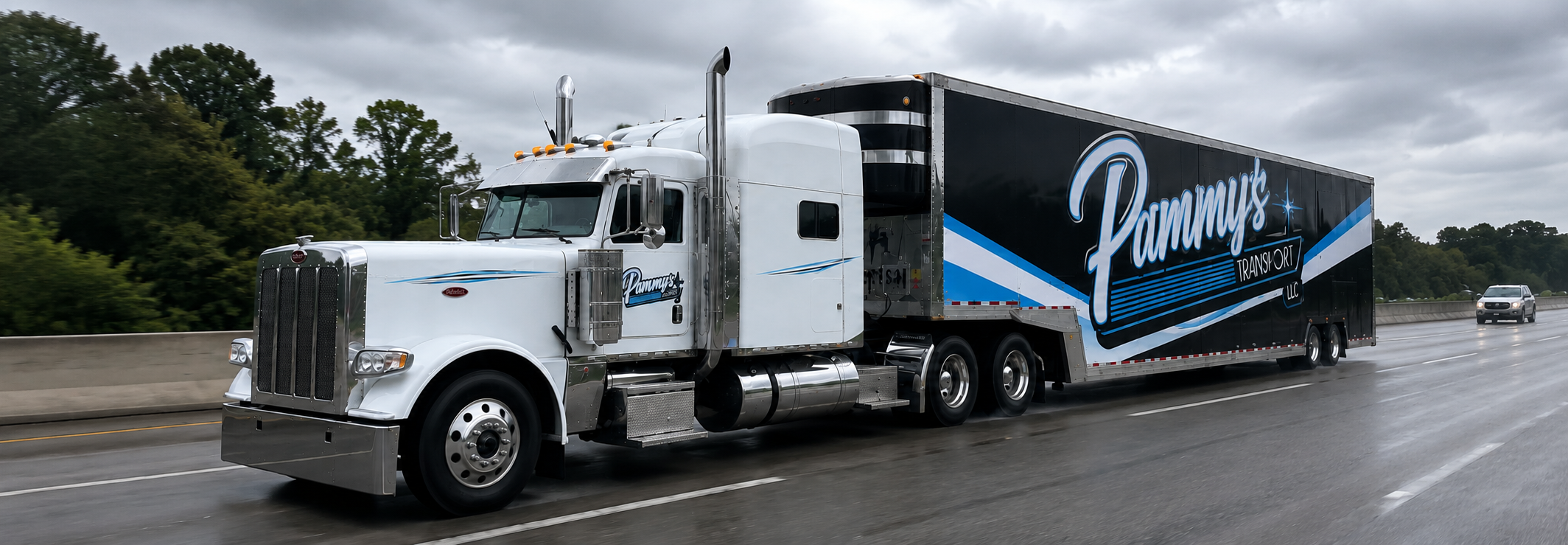
We’re a California-based vehicle transport company led by Pamela Kaser, who brings 27 years of industry experience. We serve the western United States and arrange transport nationwide, with open and enclosed options.
Our process is simple: request a quote, receive pricing, choose dates, hand over your car and receive it at its destination. Tell us it’s electric, so we can discuss its needs before pickup.
Moving EVs for a Dealership or Business
Say you’re moving five EVs from an auction to your lot. Send us each VIN, running condition, key status, charge level and pickup deadline. Learn more about our dealership transport.
Ready to ship your EV? Request your free quote or call 626-926-4739.
Electric Vehicle Shipping FAQs
Is it safe to ship an electric car?
Yes, an electric car can be shipped safely when it’s properly prepared, loaded and secured. No transport is completely risk-free, so confirm insurance coverage and inspect your vehicle at both pickup and delivery.
How much charge should my EV have at pickup?
Requirements vary by carrier, vehicle and route, so confirm the target level with your carrier. Make sure it allows enough power for loading, unloading and the drive to your first charging stop.
Can you ship an EV that won’t turn on?
In many cases, yes, although it may require special equipment and an additional fee. Before booking, tell your carrier whether the vehicle can power on, roll, steer and brake.
Can I leave my charging cable or personal items in the car?
Personal items are often restricted and may not be covered by insurance. Policies on charging cables vary, so check with your carrier before pickup.
How early should I book electric vehicle shipping?
We recommend booking two to four weeks in advance whenever possible. Flexible pickup dates also make it easier to match your EV with a suitable carrier.